
Notes from speaking about community to a room full of urban designers.
I gave a talk for Open City London, and it got me really fired up.

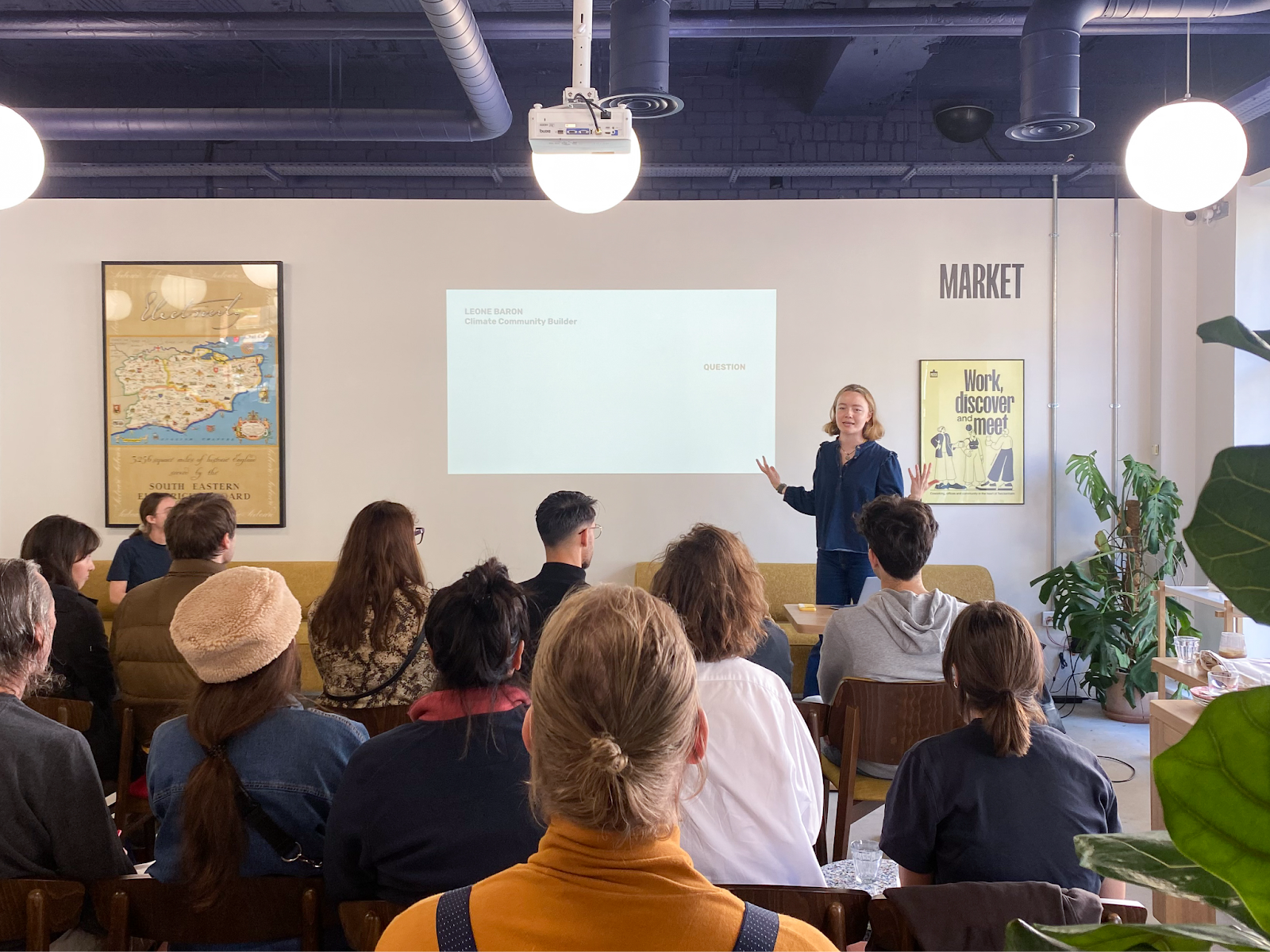
We have thousands of years of practice on how to design in-person community spaces. All practice of digital community design has occurred in my lifetime.
I believe a) community builders in a digital age should pay closer to attention to the millennia of urban design theory available to us, b) we should be building our discipline with similar rigour, and c) swapping knowledge isn’t just nice it’s needed - urban designers have a lot to learn from us too. In September I was invited to give a talk at Patch as part of the Open City festival by the brilliant Conor and Amber. It was a room full of urban planners, designers, architects and local residents (going forward I’ll clumsily group them as ‘urban designers’). In my talk I took the opportunity to pressure test A through C, and made three points…
1 - All digital and in-person community spaces, whether on the cloud or in the street, have shared principles:
If you look around you now, or if you browse any digital community you are part of, you’ll find:
Entry points - what is your first impression of the space? How do you get in?
A process of discovery - how do you know how to move through it? What are your signposts?
Spaces you can and can’t go - what parts of this community aren’t accessible to you? Where are you not allowed?
Identity-based design and language - do you feel welcome? Are your people here? Does the space re-affirm you? Do the people inspire you?
A way to achieve goals - how do you achieve your reason for being here? What can be done in this community?
Recombination with others - can you engage with other people achieving their goals? If so, how?
Unique rituals - what can you expect and look forward to? What brings you together with others? What builds the shared identity of the community you’re in?
A process of emergence - what has changed since you arrived or joined? Can you help evolve it further?
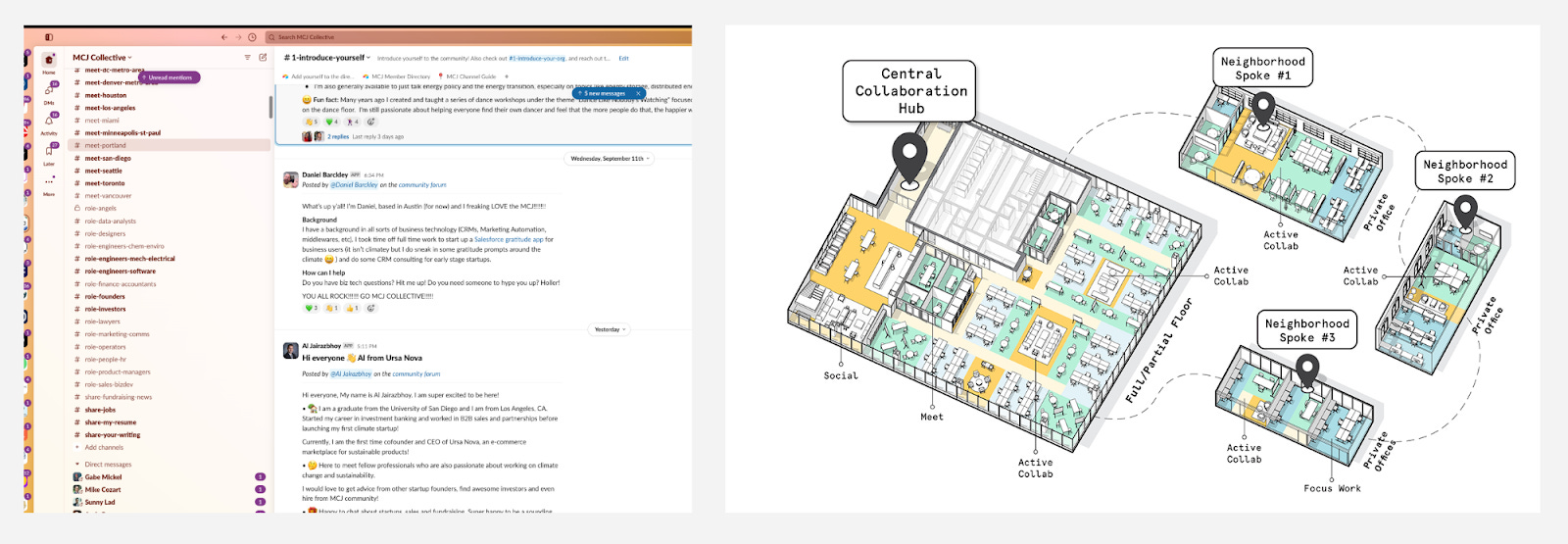
They will feel and look very different. You’ve been learning how to navigate the former (the physical world around you, the physical communities in which you exist) since birth, you’ve experienced doing so with friends and family, and what you see will evolve over time based on thousands of years of thought and thousands of hours of decisions. The latter you awkwardly discovered in your teen years, you likely log into alone, and they’re typically very limited, repetitive or restrictive in their design.
Most online community spaces aren’t really even community spaces, they’re messaging platforms, and we’re kneecapped aggressively as builders as a result - I’ll save that for a different piece.
2 - We risk a lot by not being more rigorous with digital community design.
My mother studied for her Part 3 Architecture exam with a kid on each hip. Growing up we were taught to look up and around, and notice the thousands of hours that went into every detail of the streets we walked through. Whole books on single buildings. Annual Continued Professional Development (CPD) certifications she had to obtain. The study is long and rich and hard, a comparable length to medicine, and designed to be such because the outcome affects day to day lives.
By contrast, there are but a few short courses and online spaces for the thousands of people responsible for the billions of digital community experiences happening every day. Most effort to refine how we exist digitally is with the goal of monetising our attention or exercising our wallets.
We’re missing this same study to optimise how to bring people together.
For many, that’s why they’re online in the first place. Most of us are in a community deficit - the decline of multi-generational living, multi-decade jobs and multi-year leases being just a few reasons. The vast expanse of the internet sells us connection but dupes us into seeking validation.
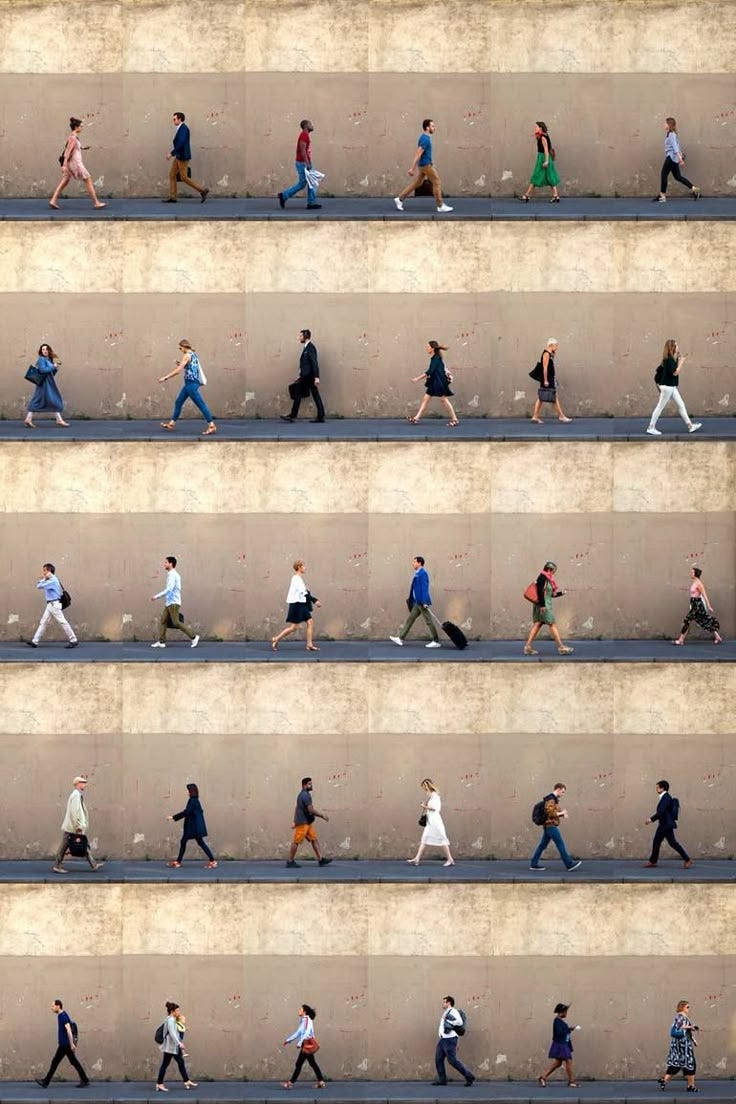
The stakes are high - elections, coups and wars can be heavily influenced by digital organising and community platforms (example). In the UK, 18-24 year-olds spend an average of 5 hours 6 minutes online each day - 73% of this is on a smartphone (source). It’s no surprise that 16-24 year olds are more likely to say they feel lonely often or alway than any other age band (source). If we think the impacts of this on the health of our communities are bad now, they’ll get worse later - this report from Ofcom has some pretty scary statistics for how consistently under 18s are on socialising online vs in person.
It feels like a wild west. The opportunity cost is also huge. Every day I’m responsible for the experience of ~3000 people working on early stage climate tech. The butterfly effects of getting this right are huge, the opportunity cost of getting this wrong feels bigger.
What if we had the same mechanisms of study and sharing knowledge as urban designers?
3 - In order to foster thriving digital and urban communities, we need better communication between both practices.
In the resulting Q&A, and on the heels of Cristina sharing learnings from engaging local communities in council decisions and Alexander detailing his work using digital mock-ups to help local residents picture changes to their local areas, something became apparent. I knew sharing knowledge was more of a necessity than a nice to have, but I didn’t know just how deeply the need was felt by urban designers.
If designed well, digital communities can:
Increase access - you don’t need to leave your house, everyone has a device.
Mix ideas from all over the world in a matter of minutes - it doesn’t really matter where you live.
Engineer serendipity better - we can increase the probability of people who really really need to meet coming together far more than relying on them to walk into the same town hall meeting or coffee shop.
Engage new voices - we can meet younger generations where they already are, hear voices of those less mobile or vocal, bypass local power structures by democratising local decisions.
Everyone listening to my talk was in the business of creating structures and mechanisms that build community. This, and recent initiatives like the Greater London Project, have me excited and thinking about how we can build a truly hybrid and rich community-first future. The tools we have to do this are evolving quicker than our knowledge of how to use them well, and how to use them together. So, we need to combine digital and in-person community building expertise to help us arrive at more effective solutions.
I truly believe day to day lives depend on it, and I’d love to hear from you if you feel the same.
Oooh, this is some juicy stuff. Physical and digital design have a lot to learn from each other.
"Engineer serendipity"
I want to know more
Love this so much!!!!